SEA DRAGON AEROSPACE LAUNCH VISUALIZATION
2024
Campaign Overview
Developed for Infinite Entertainment, this campaign visualization explored the complete flight of an ocean-launched, multi-stage aerospace vehicle. As Lead CGI Generalist, my work spanned vehicle development, look development, shot design, animation, lighting, and previsualization, creating a visual throughline from first ignition through orbital delivery.
The sequence needed to communicate the scale and function of the vehicle clearly while retaining the pace and energy of a cinematic launch. The work below brings together the strongest finished frames, motion studies, technical design material, and planning used to develop that journey.
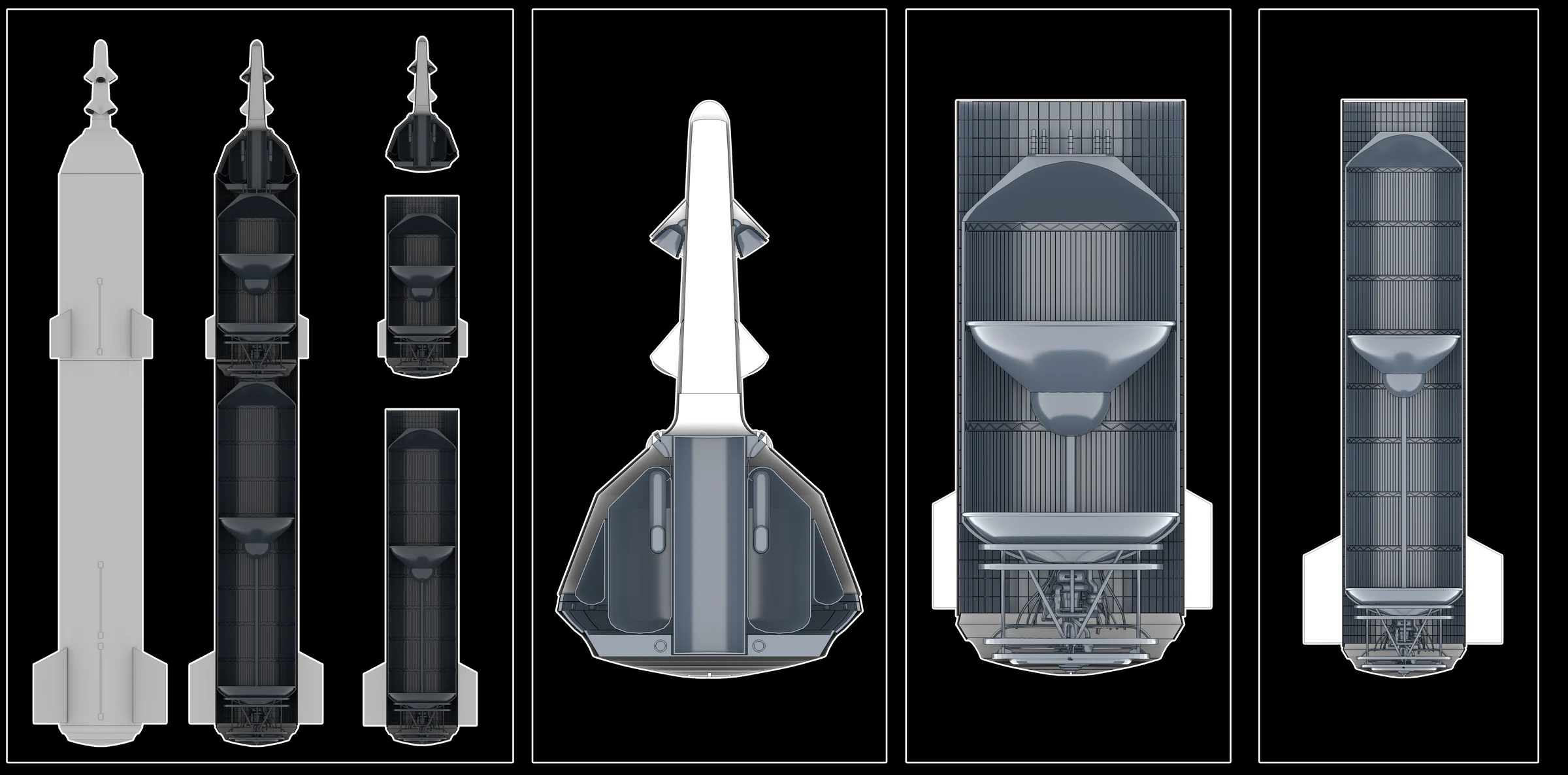
Vehicle Design and Three-Stage System
The vehicle was developed as an articulated three-stage system, with each section designed to read as part of a single launch silhouette and as an independent craft after separation. Configuration studies established the outer form, internal volume, engine placement, payload areas, and the visual relationships between the booster, second stage, and orbital hauler.
Ocean Launch Sequence
The launch begins at sea, using the surrounding water, changing sky, and low camera angle to establish scale before the vehicle clears the surface. The previsualization focused on the timing of the reveal, ignition, water displacement, and transition into the climb.
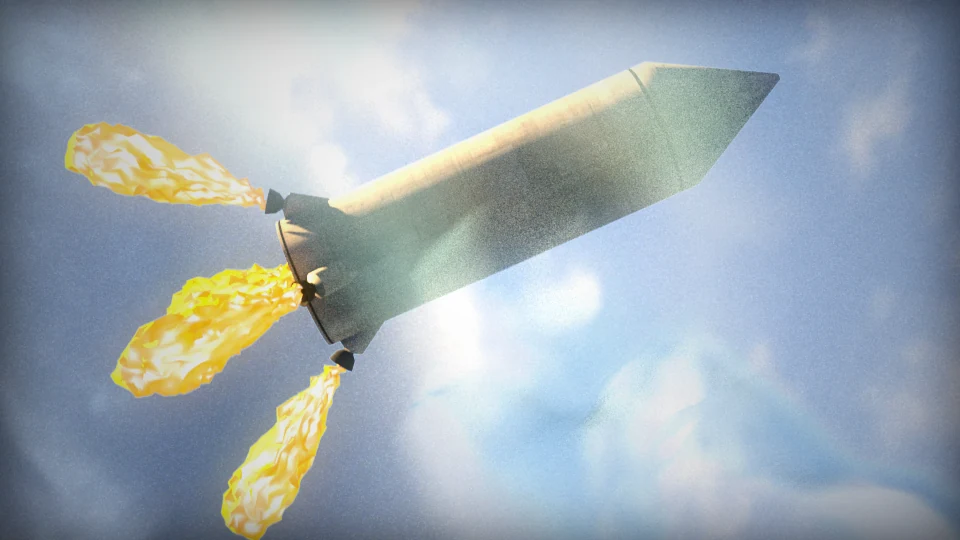
Atmospheric Ascent and Stage Separation
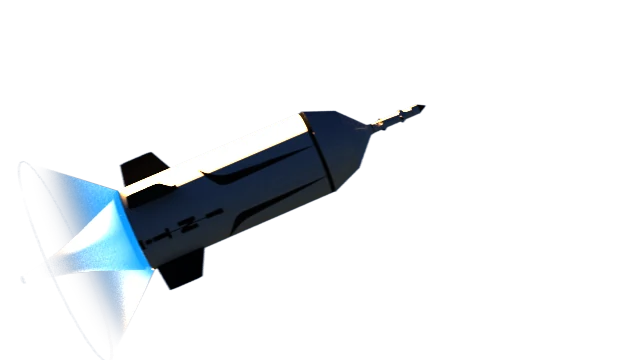
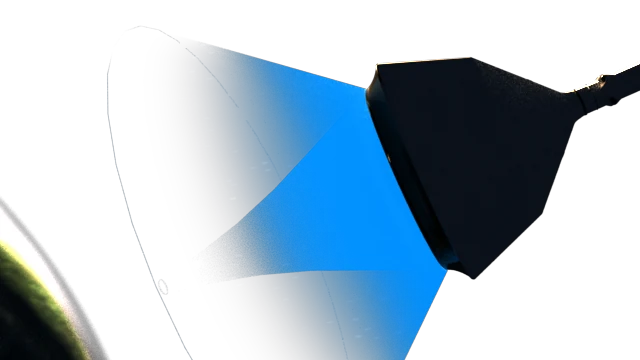
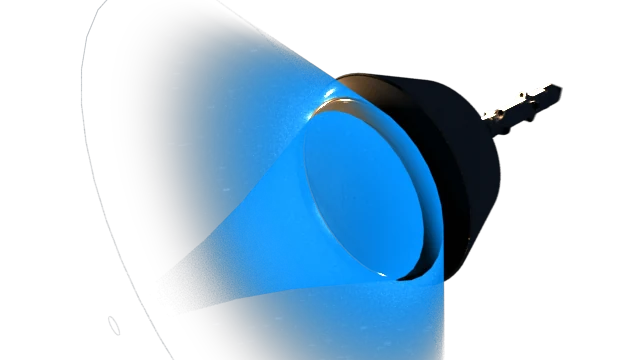
Once airborne, the sequence shifts from environmental scale to the mechanics of flight. Camera placement, engine effects, lighting, and separation timing were developed to keep each stage readable as the vehicle moves from atmosphere into space. The second-stage study uses a cleaner presentation to clarify the expanding distance between the departing sections.
Orbital Delivery
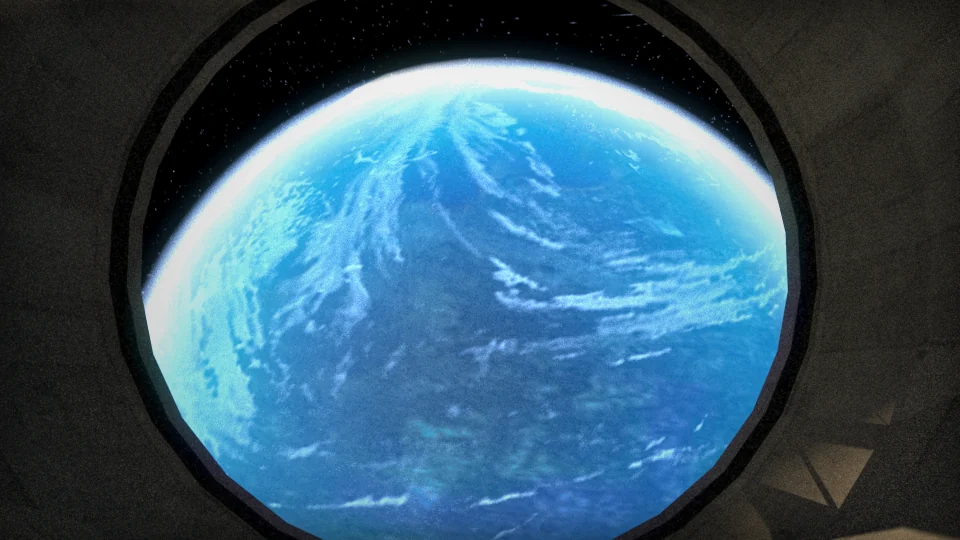
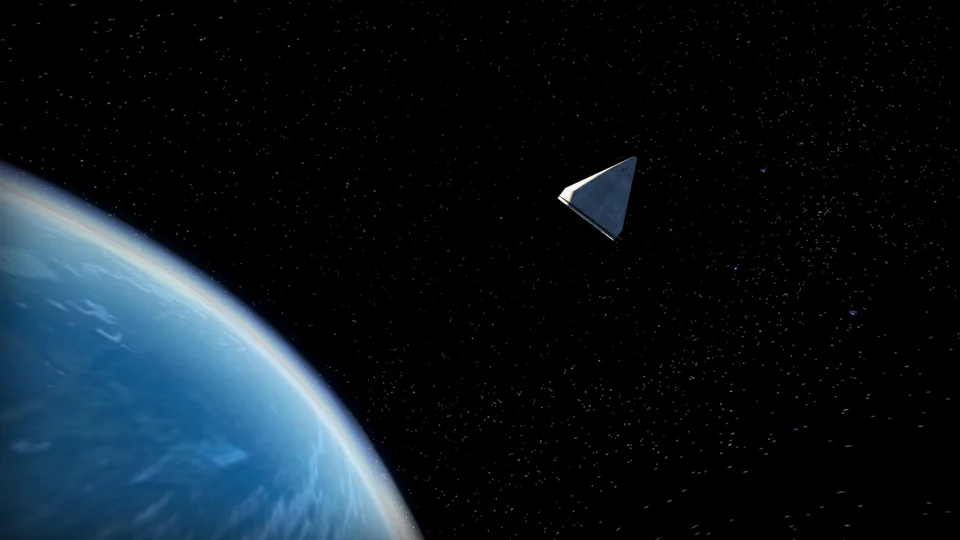
The final movement carries the viewer into orbit, transitioning from the force of launch to the quieter scale of the spacecraft against Earth. These views establish the orbital hauler as a distinct vehicle and give the sequence a clear visual destination.
Cutaway and Technical Development
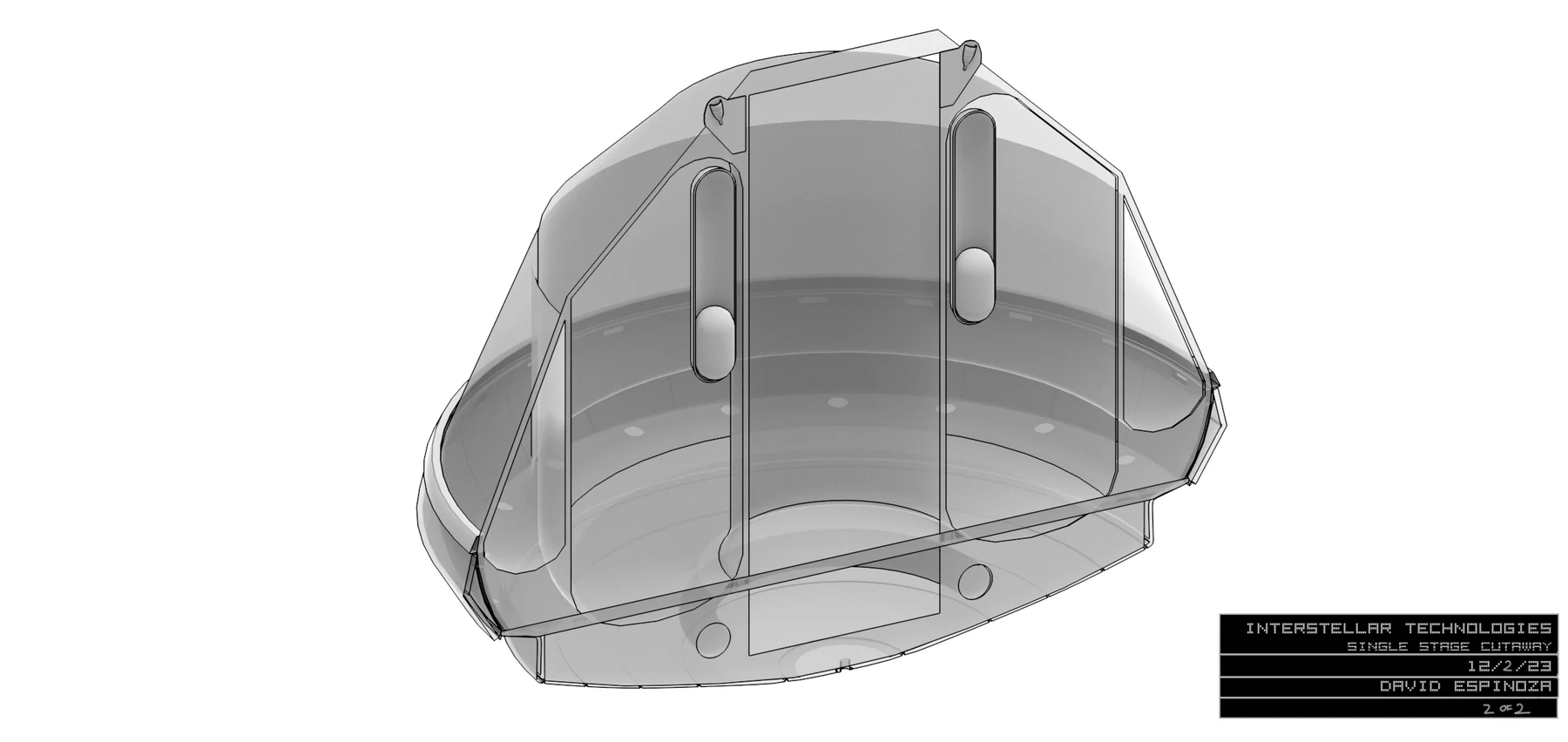
Cutaway studies were used to test how the first-stage structure, internal compartments, and exterior shell could work together. This technical pass helped ground the larger cinematic imagery in a more deliberate construction language.
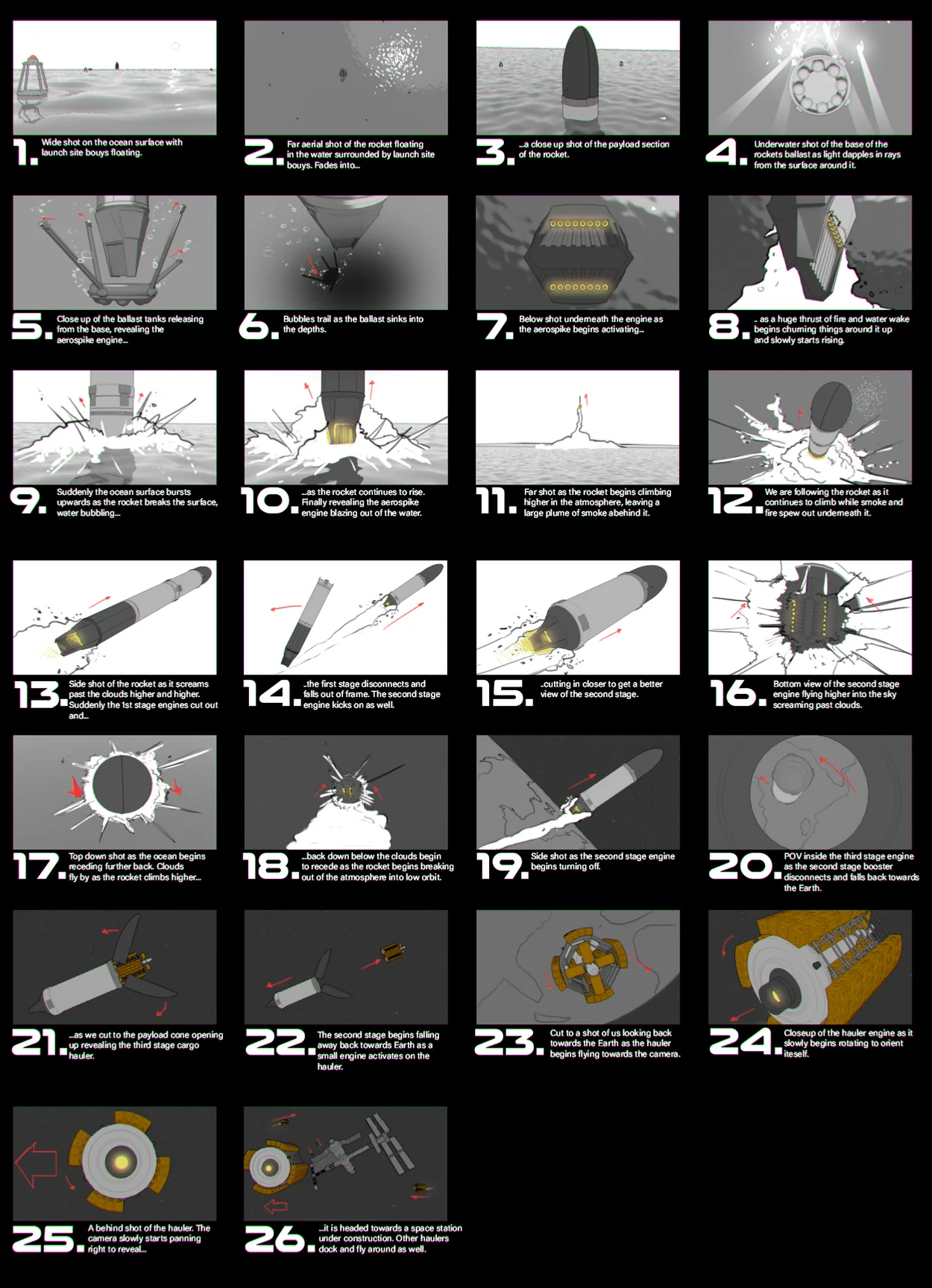
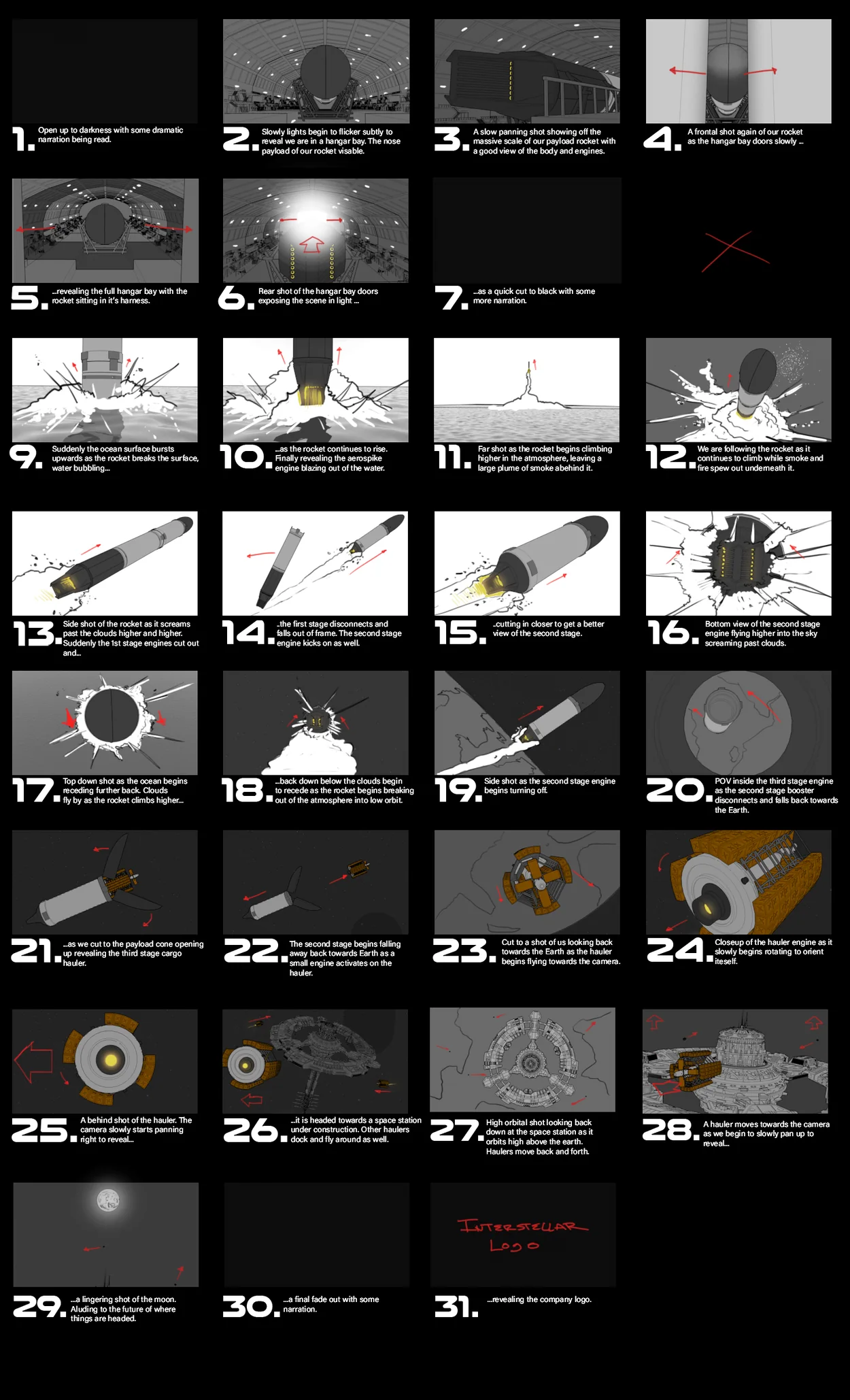
Storyboard to Previsualization
The launch and orbital progression were mapped through storyboards before the moving sequence was assembled. These sheets track camera direction, stage transitions, vehicle orientation, and the continuity of the complete flight, providing a practical blueprint for the previsualization work.